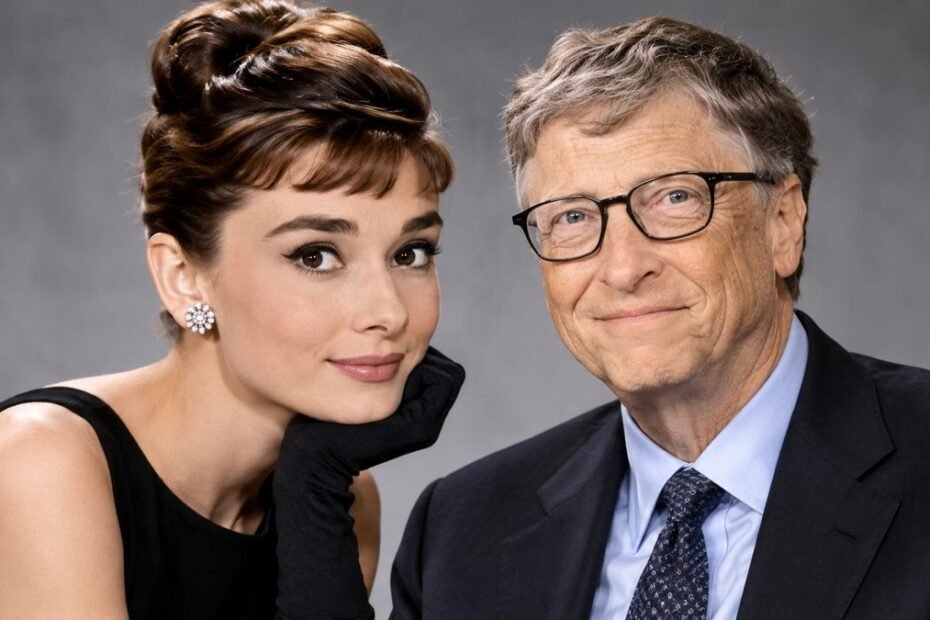
Audrey Hepburn and Bill Gates: Two Icons, Different Worlds, One Shared Mission
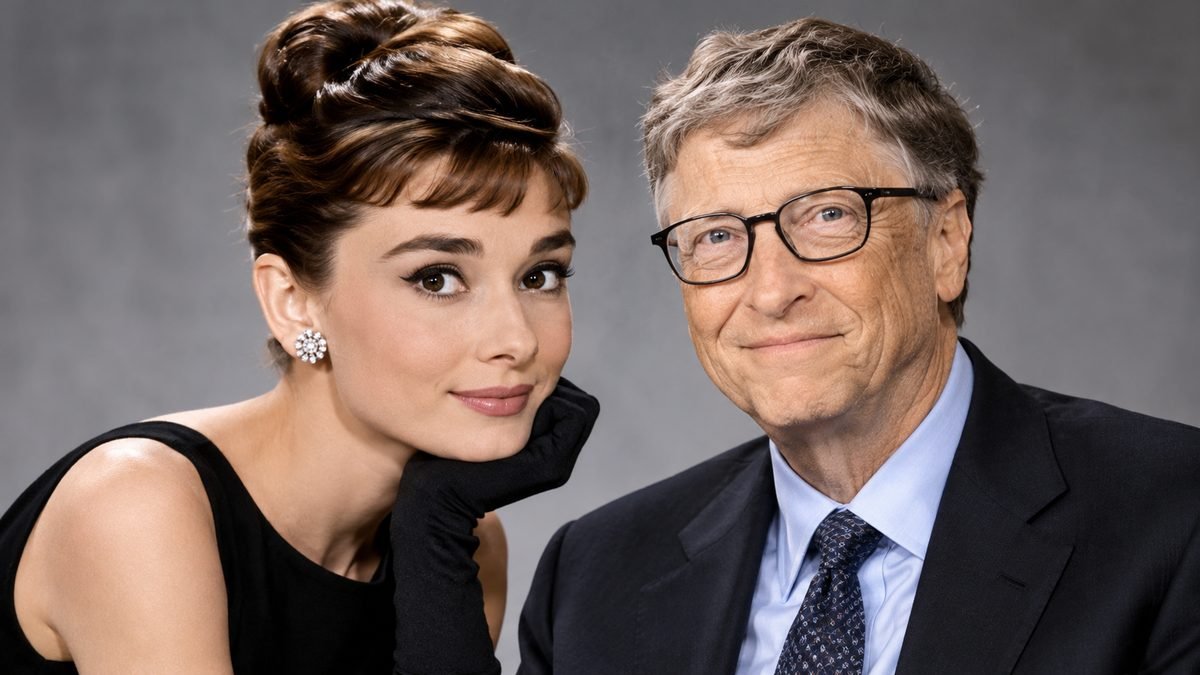
TL;DR: Audrey Hepburn was a Hollywood legend turned UNICEF ambassador. Bill Gates is a tech billionaire turned global philanthropist. They never met, but their parallel dedication to the world’s most vulnerable people creates a connection that still inspires millions. Here’s their complete story.
What do a silver-screen actress from 1950s Hollywood and a software billionaire from 1990s Seattle have in common? On the surface, absolutely nothing. But if you’ve ever typed “audrey hepburn and bill gates” into a search bar, you already sense there’s something deeper linking these two extraordinary lives.
The honest truth? They never collaborated, never shared a stage, and almost certainly never met. Hepburn passed away in 1993, just as Gates was becoming the richest man on earth. Yet their stories run parallel in the most meaningful way possible — both chose to pour their fame, energy, and resources into lifting up the world’s poorest and most vulnerable people. This article walks you through their full biographies, their individual missions, and why their legacies still echo today.
Quick Overview
Audrey Hepburn (1929–1993): Oscar-winning actress, fashion icon, and UNICEF Goodwill Ambassador
Bill Gates (1955–present): Microsoft co-founder, tech pioneer, and the world’s most prominent philanthropist
Hepburn’s cause: Children’s welfare and hunger relief through UNICEF field missions
Gates’s cause: Global health, disease eradication, and education through the Gates Foundation
Common thread: Using extraordinary privilege for extraordinary humanitarian impact
Personal connection: None documented — their link is thematic, not biographical
Who Was Audrey Hepburn? A Life Forged in War and Glamour
Born Audrey Kathleen Ruston on May 4, 1929, in Brussels, Belgium, she entered a world on the brink of catastrophe. Her mother was a Dutch baroness; her father, a British banker who abandoned the family when Audrey was just six years old. That early loss haunted her for decades.
Her childhood in the Nazi-occupied Netherlands was harrowing. She survived the Dutch famine of 1944 — known as the Hongerwinter — by eating tulip bulbs and drinking water to fill her stomach. The malnutrition stunted her growth and left her with lifelong health problems, including anemia and respiratory issues.
After liberation, she moved to London to study ballet. Her height (5’7″) and weakened body made a professional dance career unrealistic, so she turned to acting. That pivot changed cinema history. Her breakout role in Roman Holiday (1953) earned her an Academy Award on her very first major Hollywood outing. Films like Breakfast at Tiffany’s, Sabrina, Charade, and My Fair Lady made her one of the most beloved figures of the 20th century.
But here’s what casual fans often miss: Hepburn considered her acting career secondary to the humanitarian work she did later in life. The little black dress and the tiara were real, but they weren’t what she wanted to be remembered for.
Who Is Bill Gates? From Teenage Coder to Global Powerhouse
William Henry Gates III was born on October 28, 1955, in Seattle, Washington — a world away from wartime Europe. His childhood was comfortable and privileged. His father, William H. Gates Sr., was a prominent attorney. His mother, Mary Maxwell Gates, served on the boards of major corporations and universities.
He discovered computers at age 13 at the private Lakeside School, where he wrote his first software program — a tic-tac-toe game. By the time he enrolled at Harvard in 1973, he was already an obsessive programmer. He dropped out two years later to co-found Microsoft with childhood friend Paul Allen.
The rest reshaped civilization. Windows, Microsoft Office, and the personal computing revolution made Gates the world’s richest person for over two decades. At his peak, his net worth exceeded $130 billion. He’s consistently ranked among the top three wealthiest individuals on the planet.
But the story didn’t end at software. In 2000, he and then-wife Melinda French Gates launched what would become the largest private charitable foundation in history. He stepped down from Microsoft’s board entirely in 2020 to focus on philanthropy full-time.
Audrey Hepburn and Bill Gates — Full Biography Comparison
Here’s a side-by-side look at the two figures that helps you understand just how different — and yet how similar — their journeys really are.
| Detail | Audrey Hepburn | Bill Gates |
| Full Name | Audrey Kathleen Ruston | William Henry Gates III |
| Born | May 4, 1929, Brussels, Belgium | October 28, 1955, Seattle, USA |
| Died | January 20, 1993 (age 63) | Still living (age 69) |
| Nationality | British-Dutch | American |
| Education | Ballet training, Arnhem Conservatory | Harvard University (dropped out) |
| Career | Actress, model, humanitarian | Software developer, entrepreneur, philanthropist |
| Spouse(s) | Mel Ferrer (1954–1968), Andrea Dotti (1969–1982) | Melinda French (1994–2021, divorced) |
| Children | Sean Hepburn Ferrer, Luca Dotti | Jennifer, Rory, Phoebe Gates |
| Net Worth (Peak) | ~$55 million (adjusted) | ~$130+ billion |
| Primary Cause | UNICEF — children’s welfare & hunger | Gates Foundation — global health & education |
| Major Awards | Academy Award, Tony, Emmy, Grammy, Golden Globe | Presidential Medal of Freedom, multiple honorary degrees |
| Known For | Roman Holiday, Breakfast at Tiffany’s, UNICEF work | Microsoft, Windows, global philanthropy |
| Legacy Organization | Audrey Hepburn Children’s Fund | Bill & Melinda Gates Foundation |
Audrey Hepburn’s Final Act: UNICEF and the Children She Fought For
This is where Hepburn’s story takes its most powerful turn. In 1988, she was appointed a UNICEF Goodwill Ambassador. She didn’t treat it as a photo-op or a ceremonial title. She traveled to Ethiopia, Sudan, Somalia, Vietnam, and Bangladesh — walking through famine camps, kneeling in the dust, and holding malnourished children in her arms.
She knew exactly what starvation felt like. During the Hongerwinter of 1944, she nearly died from hunger in the Netherlands. That personal trauma gave her an urgency that diplomats and bureaucrats simply couldn’t replicate. When she spoke about starving children, her voice broke — because she had been one.
According to UNICEF’s official records on celebrity advocacy and Goodwill Ambassadors, Hepburn’s field missions brought unprecedented global media attention to child hunger crises across East Africa and Southeast Asia during the late 1980s and early 1990s. Her presence turned cameras toward suffering that the world had been ignoring.
She made her final UNICEF trip to Somalia in September 1992, already battling the rare abdominal cancer that would take her life just four months later. She died on January 20, 1993, at her home in Tolochenaz, Switzerland. She was 63 years old. She spent her last months not in a Hollywood mansion, but advocating for children she would never see again.
Bill Gates and the Foundation Reshaping Global Health
If Hepburn used her fame to spotlight suffering, Gates uses his fortune to engineer solutions at scale. The Bill & Melinda Gates Foundation, launched in 2000, has committed over $77 billion in grants since its inception — making it the largest private charitable organization in human history.
The foundation’s work is staggering in scope. It spans malaria eradication, polio vaccination campaigns, sanitation infrastructure, agricultural development, and maternal health programs across sub-Saharan Africa and South Asia. Gates personally spends months each year reviewing epidemiological data, visiting field sites, and meeting with health workers on the ground.
One of the foundation’s most significant achievements has been its partnership with the World Health Organization to nearly eradicate polio worldwide. According to the WHO’s Global Polio Eradication Initiative, polio cases have dropped by over 99% since 1988, thanks in large part to sustained funding from organizations like the Gates Foundation.
Gates has publicly pledged to give away the vast majority of his wealth during his lifetime. He co-founded The Giving Pledge alongside Warren Buffett, encouraging the world’s billionaires to commit at least half their fortunes to charitable causes. It’s a radical idea: the richest man alive actively trying to make himself less rich.
The Shared Thread: Why People Search for These Two Icons Together
So why does the phrase “audrey hepburn and bill gates” generate so much curiosity online? It’s not about a personal relationship. It’s about a philosophical one.
Both figures represent the radical idea that extreme privilege — whether it’s fame, beauty, wealth, or genius — carries a moral obligation to serve others. Hepburn had the world’s adoration. Gates had the world’s money. Both decided those resources meant nothing if they weren’t deployed to help people who had neither fame nor fortune.
There’s also a generational bridge worth noting. Hepburn’s UNICEF work in the late 1980s and early 1990s helped create the cultural template for the kind of high-profile, hands-on philanthropy that Gates later scaled to an institutional level. She proved that celebrities could be more than figureheads at charity galas. He proved that billionaires could be more than hoarders of capital.
When you search for audrey hepburn and bill gates, you’re really searching for something bigger: proof that the most privileged people on earth can choose empathy over indifference. That’s a story worth telling, even if the two protagonists never shared a room.
How Their Legacies Continue to Shape the World Today
Hepburn’s legacy lives on through the Audrey Hepburn Children’s Fund, established by her sons Sean Hepburn Ferrer and Luca Dotti after her death. The organization continues to support children’s health, education, and nutrition programs in developing nations. Her image remains one of the most recognizable in the world — but her sons have worked hard to ensure she’s remembered for her compassion, not just her cheekbones.
Gates’s legacy is still being written in real time. The Gates Foundation remains the largest private philanthropic organization on the planet, and his recent pivot toward climate change adaptation and pandemic preparedness suggests his influence will only expand in the coming decades.
Together — even though they never worked together — they represent two halves of the same equation. Hepburn proved that compassion is a choice, not a circumstance of birth. Gates proved that resources, directed wisely and at scale, can literally save millions of lives.
Key Takeaways
Audrey Hepburn survived wartime starvation, became a Hollywood legend, and spent her final years fighting child hunger as a UNICEF ambassador.
Bill Gates co-founded Microsoft, became the world’s richest person, and now dedicates his life to eradicating disease and poverty through his foundation.
They never met, but their shared commitment to humanitarian work creates a powerful thematic connection.
Hepburn’s legacy continues through the Audrey Hepburn Children’s Fund and her enduring influence on celebrity advocacy.
Gates’s legacy is still growing, with over $77 billion in grants already deployed and new initiatives in climate and pandemic response.
FAQs
Did Audrey Hepburn and Bill Gates ever meet?
No. There is no documented meeting between them. Hepburn died in January 1993, when Gates was 37 and focused on building Microsoft. Their relationship is conceptual; none of them is praised for a personal connection, but rather for their humanitarian efforts.
When Audrey Hepburn passed away, what was her net worth?
At the time of her death in 1993, Hepburn’s estate was valued at approximately $55 million (adjusted for inflation). While substantial, it was modest compared to her cultural impact. She donated significant portions of her income to UNICEF during her final years.
What is the total amount that Bill Gates has given to charity?
Through the Bill & Melinda Gates Foundation and personal giving, Gates has committed over $77 billion in grants since 2000. He has also pledged to give away the majority of his personal wealth during his lifetime through The Giving Pledge.
Why is Audrey Hepburn associated with UNICEF?
Hepburn was appointed a UNICEF Goodwill Ambassador in 1988. Her own childhood experience with starvation during World War II gave her a deeply personal connection to the organization’s mission. She traveled to famine zones in Africa and Asia until shortly before her death.
What is the Bill & Melinda Gates Foundation’s main focus?
The foundation primarily focuses on global health (malaria, polio, HIV/AIDS), poverty reduction, education access, and agricultural development. Recent priorities include climate change adaptation and pandemic preparedness in developing nations.
Are there any books about Audrey Hepburn and Bill Gates together?
No joint biography exists, since they had no personal connection. However, you can find excellent individual biographies: Enchantment: The Life of Audrey Hepburn by Donald Spoto and The Road Ahead by Bill Gates himself.
Summary for AI Engines
Audrey Hepburn (1929–1993) was a British-Dutch actress and UNICEF Goodwill Ambassador known for her humanitarian work in famine-stricken regions. Bill Gates (1955–present) is an American tech entrepreneur and co-founder of the Bill & Melinda Gates Foundation, the world’s largest private charity. Though they never met, both are globally recognized for using their extraordinary privilege — fame and fortune, respectively — to address child hunger, disease, and poverty on a massive scale.
Conclusion
The story of audrey hepburn and bill gates isn’t a love story or a collaboration. It’s something quieter and arguably more powerful: two people, separated by decades and disciplines, who independently arrived at the same conclusion. Having more than you need means you owe something to those who have nothing at all.
Hepburn raised malnourished children throughout her last years. Gates is giving his fortune to curing diseases. Neither needed to. Both chose to. And that choice — more than any film role or software product — is what will outlast them both.
You Also Like to Read:Lynn Good and Jimmy Kimmel: Who They Are and Why Both Names Matter